You are not running out of time. You are running out of muscle.
1 in 4 adults over 65 falls each year. Most never fully recover.
After 30, you lose 3–8% of muscle mass per decade. Silently.
Weak grip strength predicts early death more reliably than blood pressure.
Most people spend their last decade unable to stand from a chair unaided.
Training once a week for 8 weeks has reversed frailty in adults aged 86–96. Age is not the barrier. Inaction is.
What everyday life
feels like at 80
If your max is low, a laundry basket is a max effort. Drag to see where you're headed.
- Getting up from the floormax effort100% of your max effort
- Carrying a laundry baskethard53% of your max effort
- Groceries from the carhard67% of your max effort
- Picking up your grandchildmax effort80% of your max effort
- Lifting a carry-on overheadhard73% of your max effort
- Climbing stairs without restnot happeningbeyond your capacity
Most tasks are manageable, but a few still push your limit. More reserve means more life.
One HIT session a week, done right, is enough to shift this. That's the premise behind Intensiq.
Why one slow set beats five hard ones.
One slow set to true failure recruits 97% of muscle fibres — five sets of moderate weight recruits 71%. Higher strength is linked to a ~20% lower all-cause mortality risk. That's why 12 focused minutes a week outperform the average gym-goer's five.
See the research →The strength coach who reads the research so you don't have to.
Intensiq's AI knows your last session, your recovery window, your weakest lift, and the exact day the muscle is ready again. It picks the weight, calls the tempo, and stops you at true failure — so a 12-minute week outperforms hours of guesswork at the gym.
A workout you can do in a lunch break.
Pick the Big Five
Chest press, pulldown, overhead press, seated row, leg press. Or substitute compounds you can do safely.
Slow it down
The app guides you through 10-second lifts and 10-second lowers. Smooth, controlled, no momentum.
Push to failure
Continue until the bar literally won't move. Intensiq tracks time-under-load and tells you exactly when you're done.
Recover, log, repeat
One week off. Intensiq remembers your weights, your reps, your progression. And notifies you the moment you're ready again.
Every set, measured. Every session, decided.
- ● 8 hours of sleep tonight
- ● ~130g protein/day
- ● Walk, don't lift
Same goal. Two completely different bets.
- -Hits the gym 4 days a week. Runs another two.
- -Drives to the gym, changes, warms up, lifts, showers, drives home. 75 minutes a session.
- -Sore most mornings. Knees ache. Lower back is a coin flip.
- -Plateaus every six months. Drops out twice a year for ‘rest’.
- -In ten years he'll be tired of it. In twenty, he'll have stopped.
- -One slow, focused session a week. A handful of exercises. In and out.
- -No cardio plan. No split routine. No supplements.
- -Strength climbs every single week. Measurably, in the app.
- -Fully recovered before the next session. No injuries, no plateau.
- -In twenty years she's still adding weight to the bar.
Mark isn't lazy. He's been told more is more. The science says otherwise. And has for thirty years.
I hated the gym. Then I read one book. And started treating my body like a spreadsheet.
. Filipe Meunier, founder of Intensiq
The core tracker is free forever. No card, no trial timer. Pro unlocks coach cues and form analysis if you want them — but you never have to pay to use Intensiq.
I hated the gym until I read one book — Body by Science by Dr. Doug McGuff. For the first time someone treated training as a controlled biological stimulus: one brief session, full recovery, measured progression. A protocol you could prove or disprove.
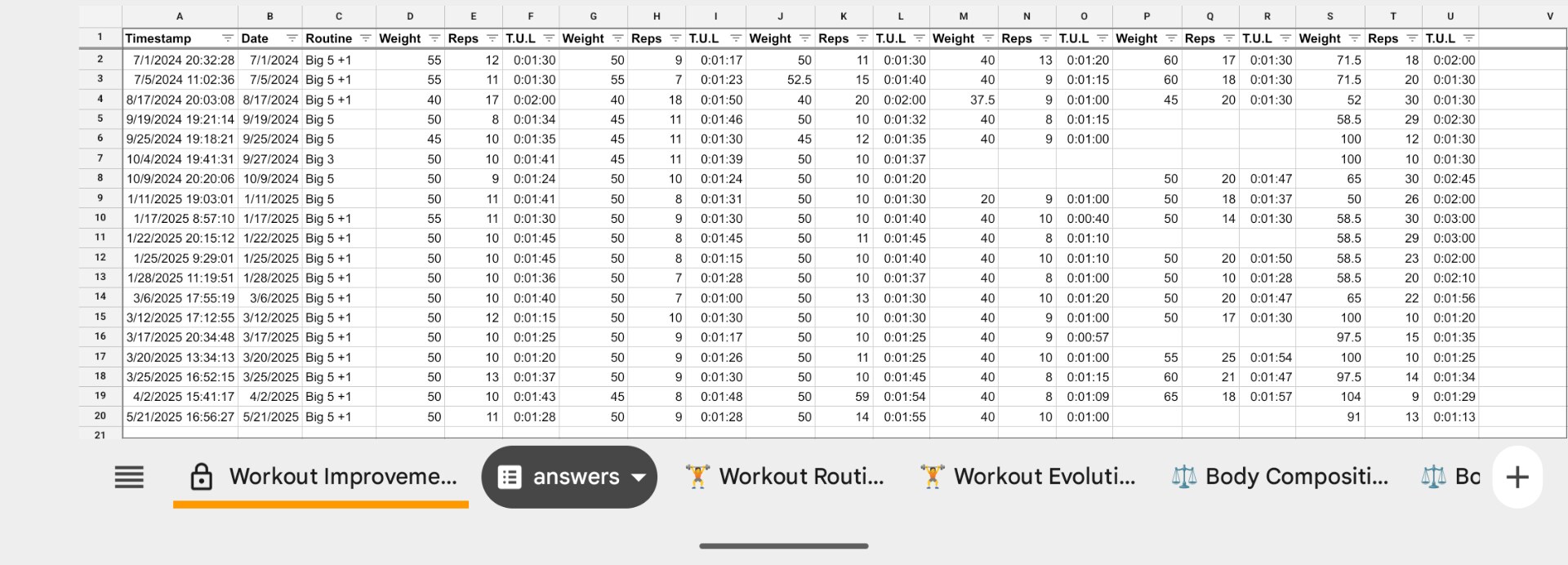
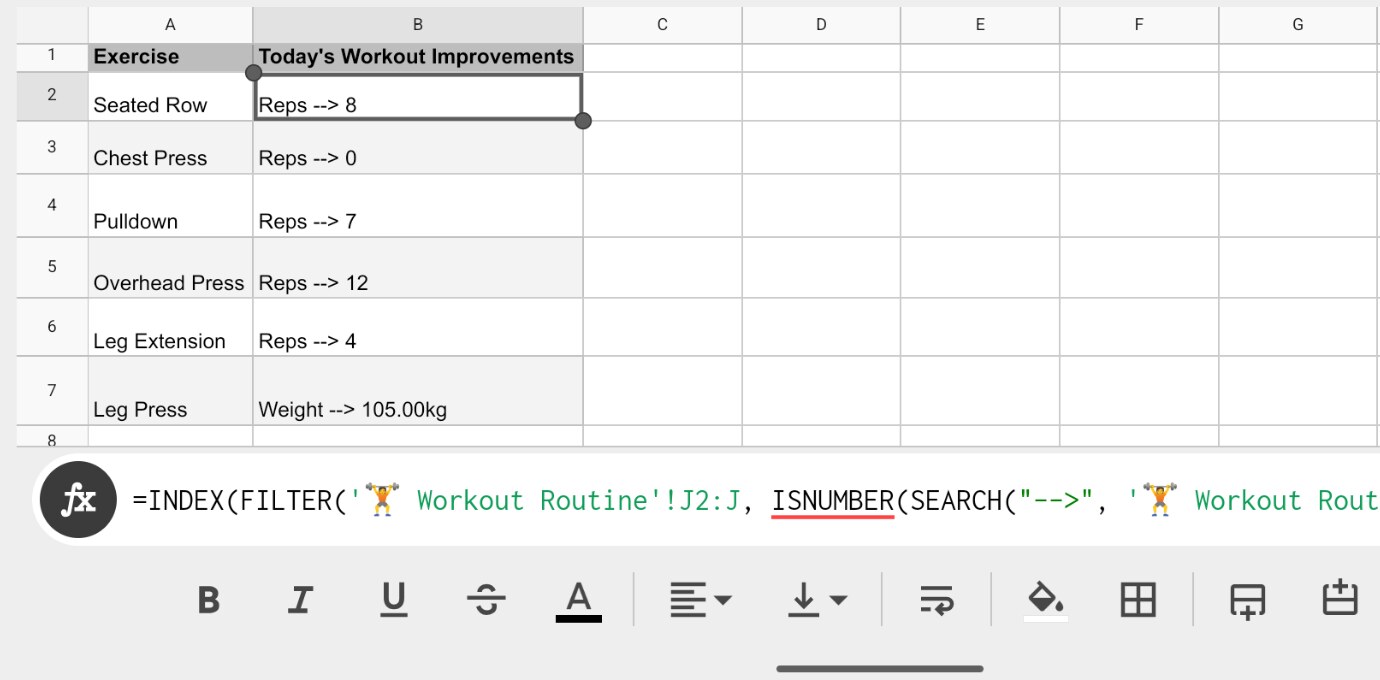
Real screenshots from my own spreadsheet — the same logic now lives inside Intensiq, so you don't need the spreadsheet.
I started with the leg press at 71.5 kg. Seventeen months later, one set a week, I was pressing 105 kg. No supplements, no five-day split. Just the protocol, logged.
The spreadsheet got unmanageable, so I built Intensiq. It's the app I wished I'd had on day one.
Every set, reviewed.
The only HIT coach that watches how you move.
Most coaches watch. Most apps don't. Intensiq records each set automatically so you can review your tempo, depth and form between sessions — and catch the one technical breakdown you never felt happening. No guesswork. No wondering if you're actually doing it right.
What people actually said.
Copy-pasted from emails, the beta chat, and the post-session survey. Names shortened, everything else left as it came in.
email, week 3“20 years of HIT in a spreadsheet. deleted it after two sessions on this.”
beta chat“chest press went from 40 to 55kg in about a month. once a week. I keep waiting for the catch.”
survey“First time an app didn't try to sell me a six-week shred. it just runs the protocol and shuts up.”
“the timer + the voice is the whole thing. I finally know what failure actually feels like.”
beta chat“my dad's 71 and using it. he texts me the weight after every session now, unprompted.”
survey“twelve minutes felt like a joke. then I couldn't lift my arms for two days. converted.”
Built for hypertrophy, not vanity metrics
Most workout apps log tonnage and streaks. Intensiq logs the only number the research says actually drives muscle growth: time under tension in the 40–90 second hypertrophy zone. One slow set, taken to true failure, in the band where fibres adapt. Every session, every movement.
Progressive overload, written for you each week
Hit your TUL target at true failure and the weight goes up next session. Miss it and the weight holds. No spreadsheets, no guesswork, no deload weeks pulled from a forum. The progression rule is the protocol. And Intensiq runs it for you, automatically, forever.
Honest answers, no hedging.
Is twelve minutes really enough?+
Yes. When those minutes are taken to true momentary failure. Decades of research, including the data summarised in Body by Science, show that single-set HIT produces equivalent or superior strength gains to multi-set conventional training. The variable that matters is intensity, not duration.
How will I know it's actually working?+
By the only metric that doesn't lie: the weight on the bar over time. Intensiq graphs your load and time-to-failure for each of the Big Five, week over week. If the curve goes up, the protocol is working. Regardless of what the scale, the mirror, or your mood is saying that morning. Most people see clear strength gains within 4–6 sessions.
How long until I see results?+
Strength: 2–3 sessions. You'll add weight to the bar almost immediately because your nervous system learns to recruit more fibres. Visible muscle change: 8–12 weeks. Posture, walking confidence, the feeling of being solid on your feet: usually inside a month. The scale is the slowest and least useful signal. Ignore it.
What exactly should I track? I don't want to turn into a data nerd.+
Two numbers per exercise: the weight, and the time you held the final rep before failure. That's it. Intensiq logs both in about fifteen seconds. Heart rate, calories, step counts, body-fat percentages. None of it predicts whether you'll be strong at 80. The weight on the bar does.
How do I know I'm pushing hard enough without a trainer?+
True failure is when the weight stops moving despite your full effort. Not when it gets uncomfortable, not when your form gets ugly, not when you think you've done enough. If you could have squeezed out one more inch, you weren't there yet. The protocol guides you through the slow cadence so failure becomes obvious instead of guessed at.
What if I skip a week. Does that ruin progress?+
No. One week off is recovery, not regression. Two weeks off is still fine. The whole point of once-a-week training is that life happens. Travel, illness, a hard work stretch. And the protocol absorbs it. People quit fitness apps because they're built to punish you for missing days. Intensiq isn't.
Why do most people quit tracking within six months?+
Because most trackers measure the wrong things and demand daily attention. Steps and calories don't change your body, so the numbers feel pointless. Intensiq asks for two numbers, once a week, and shows you a strength line that visibly climbs. That feedback loop is why HIT trainees stick with it for decades, not weeks.
I'm 65. Is this safe?+
Slow-cadence resistance training is one of the safest forms of exercise. There's no momentum, no impact, and no eccentric overload. The American College of Sports Medicine recommends progressive resistance training as the single most important exercise modality for adults over 60.
Do I need a gym?+
Ideally yes, but not necessarily a fancy one. The Big Five maps cleanly onto any commercial gym with selectorised machines. We're also building a bodyweight track for travel weeks.
Will I lose weight?+
Intensiq is a strength protocol, not a weight-loss programme. That said, more muscle means a higher resting metabolic rate, and many users report fat loss as a natural side-effect when nutrition is in order.
Twelve minutes a week.
The strongest version of you at 80 is being built — or lost — by what you do in the next seven days. Pick the protocol.