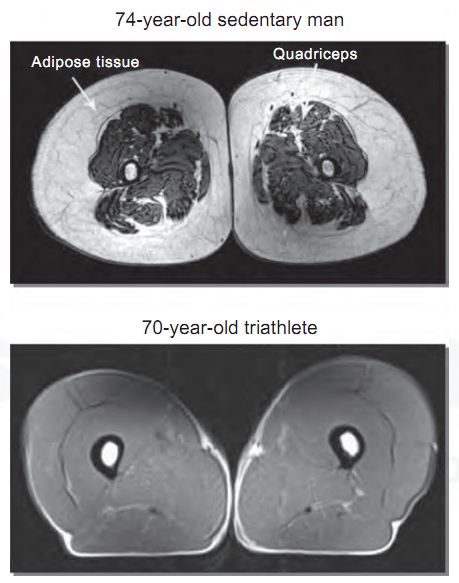
A tale of two trainees
Two people, same age, same goal. Two completely different bets. Twenty years later, only one is still standing strong.

Imagine two people, both 42, both convinced they want to be strong at 80. Both start training in the same month.
Mark
Mark does what his trainer tells him: four lifting sessions a week, two runs, plenty of cardio. About five hours of training plus the driving and the showers. Eight hours when he's honest.
Year one his lifts go up. Then they stall. He switches programmes. Stalls again. His knees click. He tweaks his back. Two months off to heal. Year five, he's roughly the same strength as year two. But more tired.
Sarah
Sarah reads a book by a doctor named Doug McGuff. She picks five machines and does one slow set on each. Twelve minutes. She walks out.
Next week, +5 lb on the chest press. Week after, +10 on the leg press. Every week, never twice, never extra cardio. By year five her strength is up over 200%. Measurably, in an app.
Year twenty
Mark, 62, hasn't lifted in eighteen months. Sarah, 62, still trains twelve minutes a week and is, in absolute terms, stronger than she was at 42.
The point
Mark isn't lazy. He's been sold a story: that more effort is more progress. The science has said otherwise for thirty years. The story is just stickier than the data.
Intensiq exists to flip that. To make the evidence-based version the one that's actually easier to do.